For many people, the earliest signs of HIV are subtle.
Fatigue, mild rashes, or flu-like symptoms can appear without seeming alarming, and some experience no symptoms at all.
Many learn their status only after a routine test, long after the initial infection.
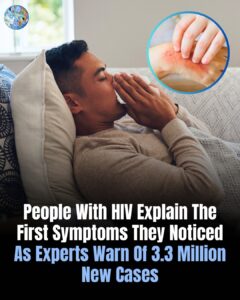
With global experts warning that millions more could contract HIV by 2030, these personal stories help others understand what early HIV can look like in real life.
In an online forum, one person described waking up after a full night’s sleep feeling unable to get out of bed. The exhaustion felt completely different from normal tiredness. Bloodwork later revealed an HIV diagnosis, even though the infection had likely been present for some time.
Another shared that just a week after a risky situation, they developed flu symptoms and unusual rashes. Because they rarely got sick, they ordered a free at-home HIV test. A faint positive line appeared within minutes—a moment they described as terrifying.
But once they began antiretroviral treatment, their outlook changed. Modern HIV medications cannot cure the virus, but they stop it from multiplying and reduce viral load to undetectable levels. When someone’s viral load is undetectable, they cannot transmit HIV sexually—a principle known as U=U.
Despite these medical advances, global progress is at risk. Funding cuts have disrupted clinics, reduced access to testing, and caused medication shortages, especially in high-prevalence regions. Without reliable prevention and treatment, experts warn infections could rise significantly.
Certain groups continue to face higher risk, including people who inject drugs, sex workers, transgender individuals, men who have sex with men, prison populations, and young women in parts of Africa. Many specialized clinics serving these communities have closed, worsening barriers to care.
Because early HIV can resemble common illnesses, testing remains essential. Fatigue, fever, rashes, swollen lymph nodes, and night sweats can occur, but the only way to know your status is through a test.
Even with global challenges, hope remains. Treatments are effective, long-acting medications are emerging, and early diagnosis allows people with HIV to live long, healthy lives. If you’re unsure about your status, getting tested early is one of the most important steps you can take.